



Santorini is one of the oldest wine-producing regions in the world. The volcanic island has been cultivating vines for approximately 3,500 years, and the wines it produces are genuinely unlike anything grown elsewhere. Not in the marketing sense. In the literal, geological sense.
The island's soil is volcanic pumice and lava. Rainfall is almost nonexistent. The Aegean wind is relentless. The vines grow in basket shapes called kouloura, trained low to the ground to protect the grapes from the wind and to catch the moisture from the sea fog at night. The result is a grape under enormous stress that concentrates every available resource into flavour, acidity and mineral character.
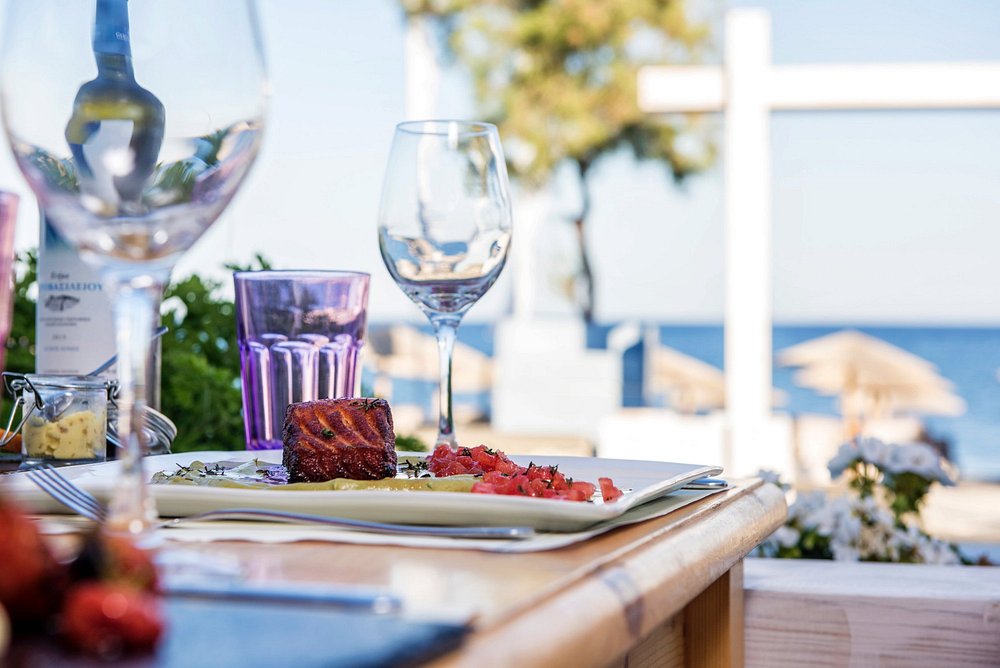
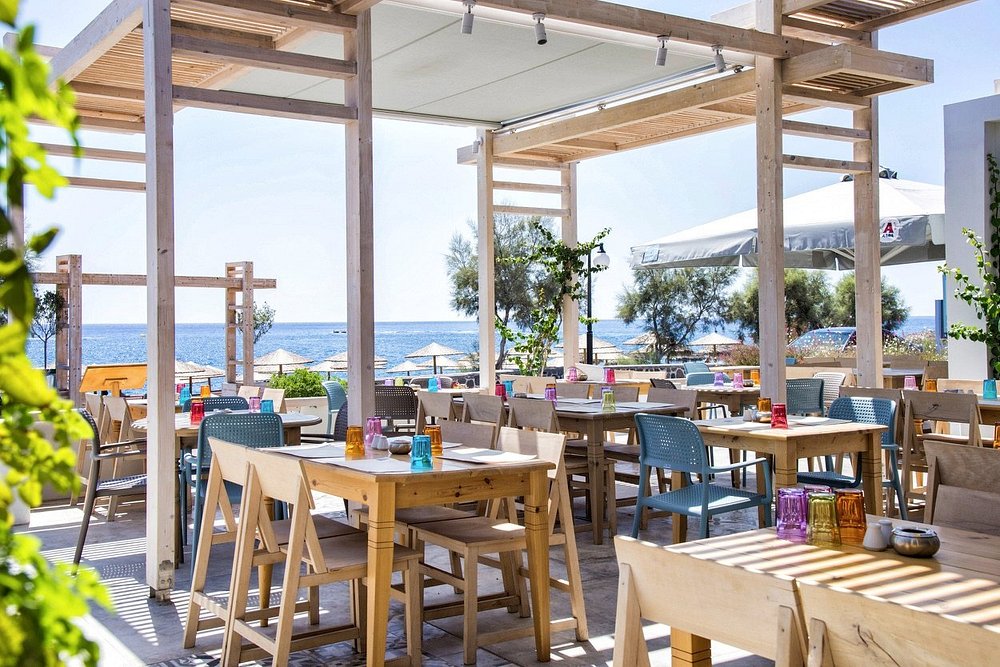
This guide covers the wines you will encounter in Santorini, what they taste like, and how to pair them with the food. Specifically, the food you will find on the southern coast of the island, on Perivolos beach, at a table facing the sea.
Assyrtiko: The Grape That Built Santorini's Reputation
Assyrtiko (pronounced ah-SEER-tee-koh) is Santorini's signature white grape and one of the most respected indigenous varieties in the world. It does something almost no other grape can: it retains fierce, bright acidity even in extreme summer heat. On an island where August temperatures push past 35°C, this is a remarkable feat of chemistry.
In the glass, expect lemon, lime, grapefruit, wet stone and sea spray. There is a saline quality that comes directly from the volcanic terroir. The finish is long, clean and electric.
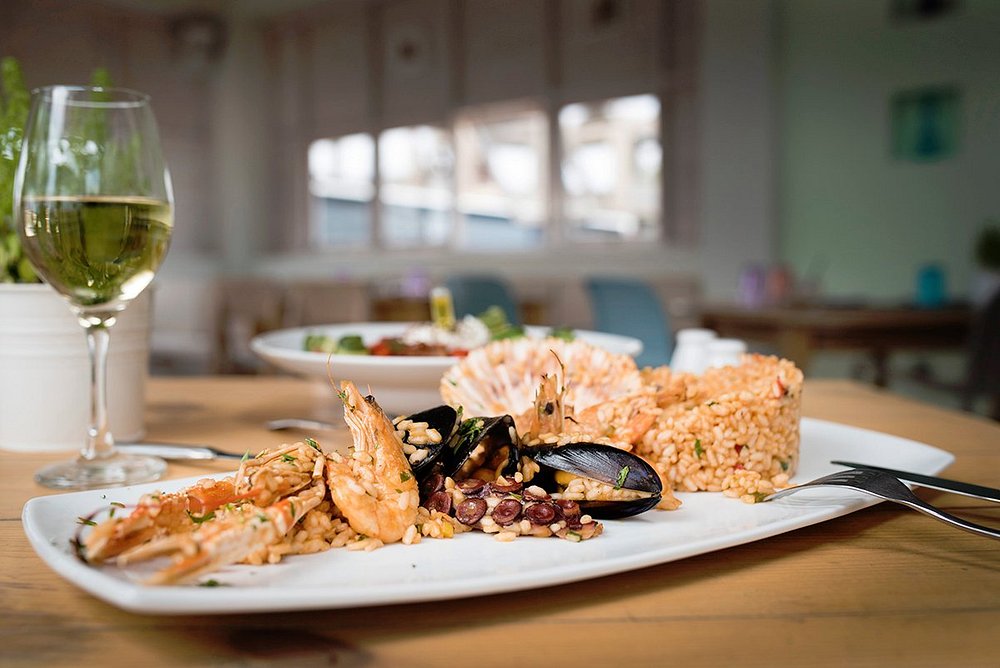
Assyrtiko with seafood is perhaps the most natural pairing in Greek cuisine. The wine's high acidity cuts through the richness of fish and shellfish, its mineral saltiness echoes the brine of the sea, and its citrus character lifts everything on the plate.
Specific Pairings at aegean Safran
At aegean Safran, the mussels are steamed with Assyrtiko wine itself. Ordering a glass of the same wine with the dish closes the loop perfectly.
Grilled octopus (25€): the char and smoke need a wine with structure and enough acidity to cut through the olive oil. Assyrtiko is the answer.
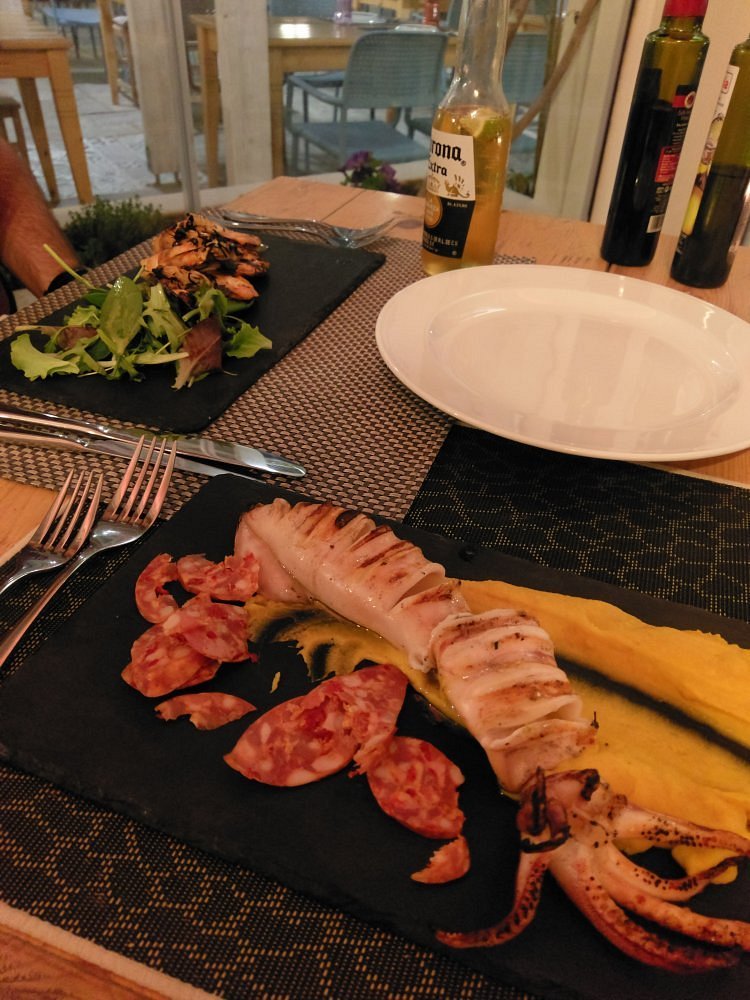
Fried calamari (17€) and grilled calamari (24€): the classic pairing. Crisp wine, crisp batter, saltwater in both.
Mussels with Assyrtiko (16€): the wine is already in the cooking. Drink what went into the pot.
Butter shrimps (25€): the richness of butter and garlic needs high acidity to stay fresh. Assyrtiko handles it effortlessly.
Aegean fish fillet (35€): clean white fish in red sauce benefits from the weight and minerality of a good Assyrtiko.
Santorini fava (11€) and tomato fritters (12€): the earthiness of fava and the sweetness of the tomato fritters both find their balance with a cold, mineral Assyrtiko.
Shrimp tartare with salmon roe (22€): delicate and precise. A lighter, more citrus-forward Assyrtiko works best here.
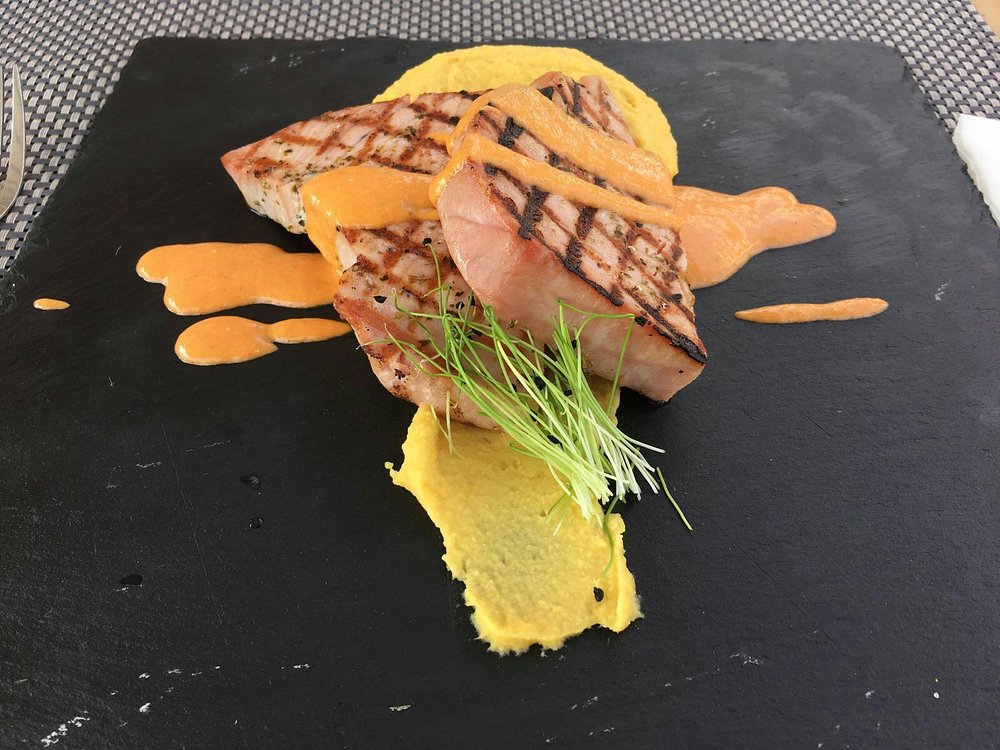
Tuna carpaccio (19.50€): the lemon and flower of salt in the dish mirror the lemon notes in the wine. A natural reflection.
Mediterranean velouté fish soup with saffron (18€): the saffron adds complexity. An Assyrtiko with some bottle age handles the depth better than a very young wine.
Saffron Salad with fish fillet and smoked salmon (23€): the smokiness of the salmon and the oil of the dressing need a wine with enough acid and mineral weight to stay present. Assyrtiko again.
Nykteri: For Richer Dishes and Longer Evenings
Nykteri (sometimes spelled Nychteri) is also made from Assyrtiko grapes, but with a crucial difference. The grapes are harvested at night to avoid the heat of the day, then aged in oak barrels. The result is a fuller, rounder wine with notes of honey, citrus, vanilla and a lingering complexity.
Where straight Assyrtiko is a blade, Nykteri is a broad shoulder. It works with richer, more layered dishes.
Lobster linguine for two (160€): the richness of lobster and cream pasta needs a wine with body and oak structure. Nykteri is built for this.
Fresh salmon linguine (24€) with lemon, cream and fennel: the cream and oak-aged roundness of Nykteri are a natural match.
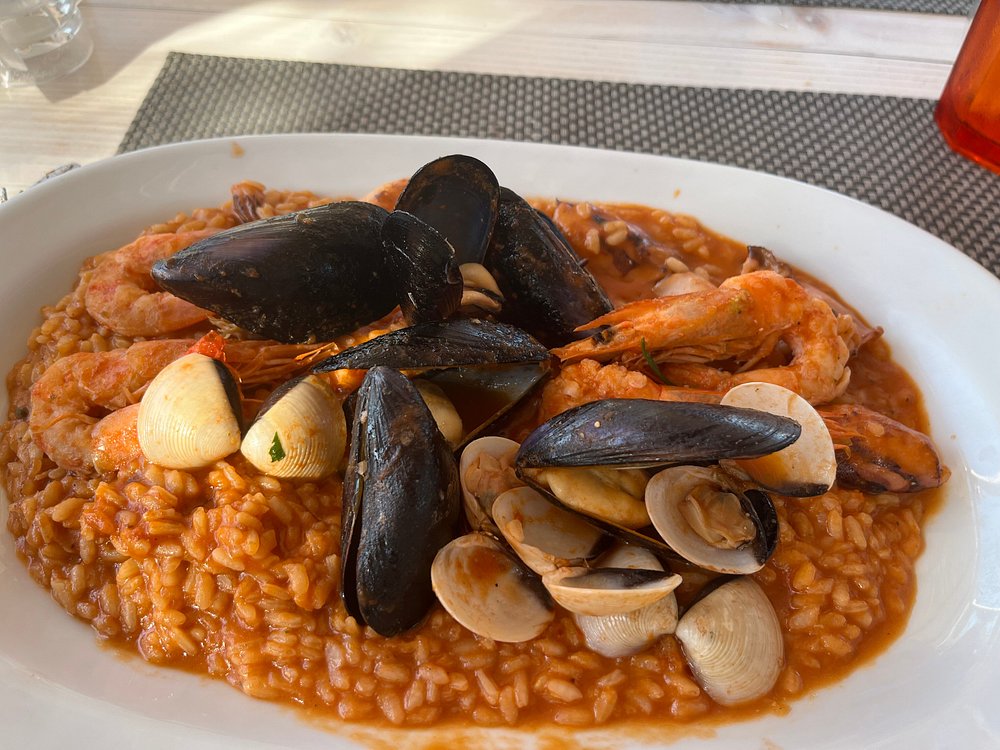
Seafood linguine (28€) in mild tomato sauce: the tomato acidity and the oak of the Nykteri balance each other.
Shrimp risotto (26€): richness for richness. Nykteri holds its ground.
Aidani: The Aperitif Grape
Aidani is a lighter, more floral white variety grown alongside Assyrtiko. It carries stone fruit aromas, gentle citrus and a soft, refreshing character. It is not built for heavy dishes. It is built for beginnings.
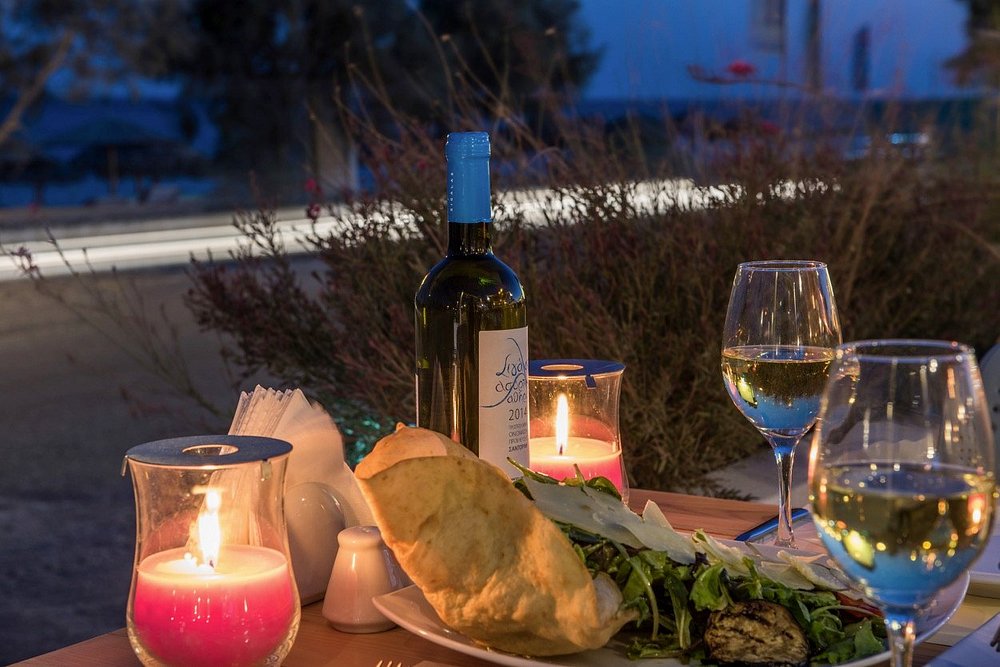
Order an Aidani when you first sit down with the meze: tzatziki (7€), white tarama (8€), Greek salad (13.50€), the caprese with buffalo mozzarella (16€). Light food, light wine. The evening can move to Assyrtiko from there.
Mavrotragano and Mandilaria: The Reds
Santorini's reds are less well-known internationally but worth understanding. Mavrotragano is a grape that produces structured, spicy reds with dark fruit character. Mandilaria is typically blended with it for colour and depth. Together they produce wines with enough tannin and fruit to stand up to meat dishes.
Beef pepper steak (33€): the pepper and spice of the sauce need tannin structure and dark fruit. Mavrotragano.
Lamb chops (35€) with mashed potatoes and wine sauce: the classic Greek red meat pairing. Mavrotragano's fruit and spice echo the sauce directly.
Tomahawk pork steak XXL (28€): a big cut needs a big wine. Mandilaria in the blend adds the muscle.
Armenian Kebab (18€) with yogurt sauce: the spice of the kebab and the fat of the yogurt call for a red with enough fruit to stay lively.
Moussaka with Santorini aubergines (17€): in Santorini, a medium-bodied Mavrotragano with the characteristic smoky note of volcanic terroir fits this dish perfectly.
Vinsanto: The Sweet Wine for the End of the Evening
Vinsanto is Santorini's ancient dessert wine. Assyrtiko and Aidani grapes are sun-dried after harvest to concentrate the sugars, then fermented slowly into an amber, complex sweet wine with flavours of dried fruit, honey, caramel, nuts and a long, sophisticated finish.
It is not cloyingly sweet. The underlying Assyrtiko acidity keeps it alive. A small glass after dinner, with or without dessert, is the traditional way to end an evening in Santorini.
At aegean Safran, it pairs with the chocolate pie (14€), the orange pie with ice cream (10€), or simply on its own as the stars come out over Perivolos.
A Note on Drinking Wine by the Beach
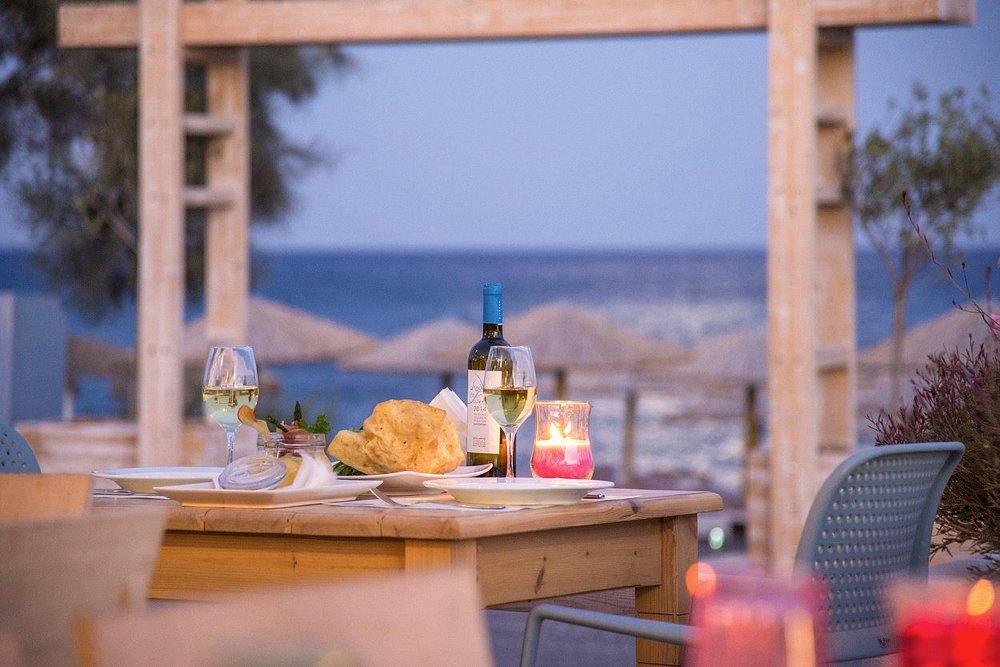
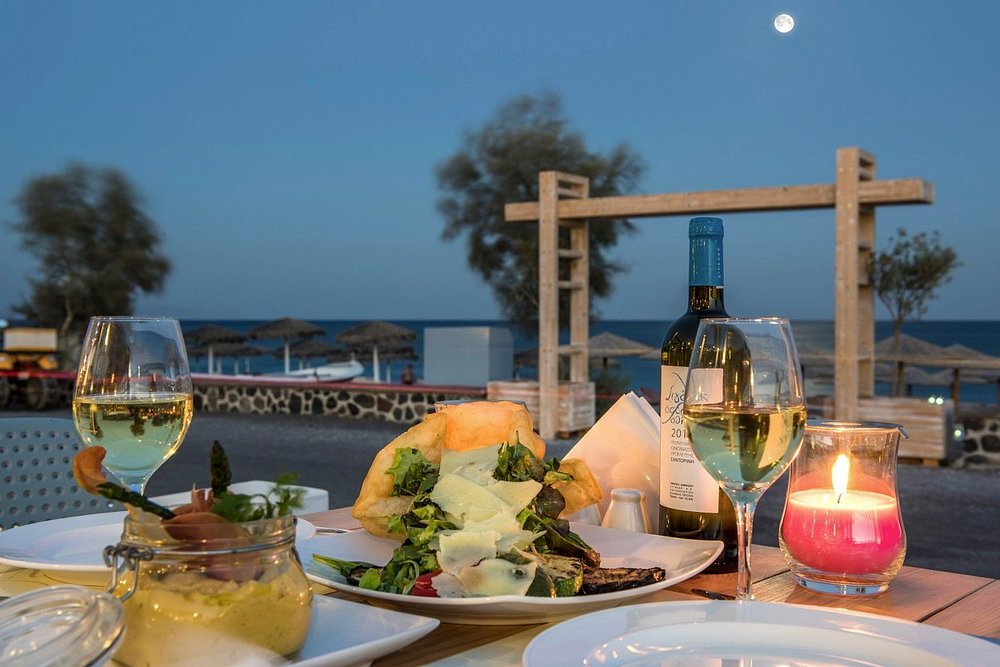
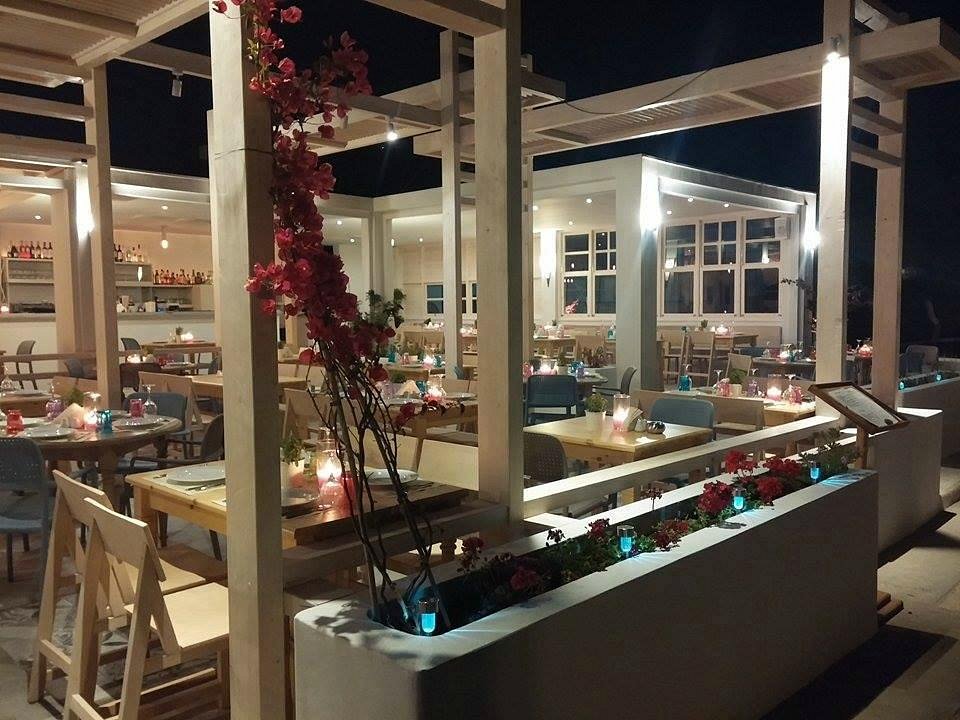
Wine pairing is a useful framework. But the honest answer to "what should I drink with my seafood at Perivolos beach" is simpler than any pairing chart: a cold Santorini Assyrtiko, a view of the Aegean and the particular quality of light that the island produces at 8pm in August.
That specific combination is difficult to replicate. The food and wine lists at aegean Safran are built to create the conditions for it.
Open Monday to Sunday, 10:00 to 22:30. Perivolos beach, Santorini 847 03. Reservations: +30 22860 81102.
For the dishes mentioned in this guide, see the full menu at aegean Safran or read What To Eat in Santorini: Fava, Tomato Fritters, Seafood and Aegean Flavours.
Frequently Asked Questions
What wine should I drink with seafood in Santorini?
Assyrtiko is the definitive pairing for seafood in Santorini. Its high acidity, mineral saltiness and citrus character complement grilled octopus, calamari, fresh fish, mussels and shrimps naturally and powerfully.
What does Assyrtiko taste like?
Santorini Assyrtiko tastes of lemon, lime, grapefruit, wet stone and sea spray, with a saline mineral quality from the volcanic soil and a long, clean, electric finish. It retains bright acidity even in extreme heat, which is what makes it unusual among white wines.
What is Nykteri wine?
Nykteri is a fuller-bodied white wine from Santorini, made from Assyrtiko grapes harvested at night and aged in oak barrels. It is rounder and more complex than standard Assyrtiko, with honey, citrus and vanilla notes, and pairs well with richer seafood dishes, pasta and risotto.
What is Vinsanto?
Vinsanto is Santorini's traditional sweet dessert wine, made from sun-dried Assyrtiko and Aidani grapes. It has flavours of dried fruit, honey and caramel and is served after dinner, either on its own or with dessert.
Can I pair Santorini wine with fava and tomato fritters?
Yes. Assyrtiko is an excellent pairing for both Santorini fava and tomatokeftedes (tomato fritters). The wine's minerality and acidity balance the earthiness of the fava and the sweetness of the tomato.