

Santorini is one of the most photographed islands in the world. The caldera, the sunsets, the blue domes. But ask anyone who has eaten well here and they will tell you: the food is just as memorable as the view.
The island's cuisine is shaped by two things that have nothing to do with tourism. The first is the volcanic soil, which produces ingredients found nowhere else on earth with quite the same intensity of flavour. The second is a maritime culture going back thousands of years, which means the seafood is not just fresh. It is a point of pride.
Here is what to eat in Santorini, explained honestly, with the dishes that matter and where to find them on the southern coast.
Santorini Fava: The Dish That Defines the Island
Fava is the first thing to understand. Not because it is complicated, but because it is so simple that it is easy to dismiss. Do not.
Santorini fava is a smooth, creamy purée made from yellow split peas that have been cultivated on the island for over 3,500 years. It carries PDO status (Protected Designation of Origin) from the European Union, the same recognition given to Champagne or Parmigiano-Reggiano. The volcanic soil and dry Cycladic climate give the peas a particular sweetness and depth that cannot be replicated anywhere else.
It is served with olive oil, capers, pickled onions, and sometimes grilled octopus on top. It is naturally vegan. It is one of the best things you will eat in Greece.
At aegean Safran on Perivolos beach, the Santorini fava (11€) comes with caper crumble and pickled onions, true to tradition and properly made.
Tomato Fritters (Tomatokeftedes): Santorini's Signature Snack
The Santorini cherry tomato is not like other tomatoes. It grows in volcanic ash and pumice soil with almost no rainfall. The result is a fruit that is smaller, more concentrated in flavour and intensely sweet. Tomatokeftedes, or tomato fritters, are the most direct way to taste them.
The recipe is straightforward: finely chopped tomatoes mixed with onion, fresh herbs (mint and basil), sometimes feta, then shaped into patties and fried in olive oil until crisp outside and soft and juicy inside. The contrast between the crunch and the warmth of the tomato inside is exactly what makes them worth ordering everywhere you go.
At aegean Safran, the Santorini tomato fritters (12€) come with cream cheese, a modern touch that works well. They are a benchmark version of the dish, made with local tomatoes in season.
Fresh Seafood: The Core of the Santorinian Table
Santorini is an island in the Aegean Sea. The seafood is not a footnote on the menu. It is the main event.
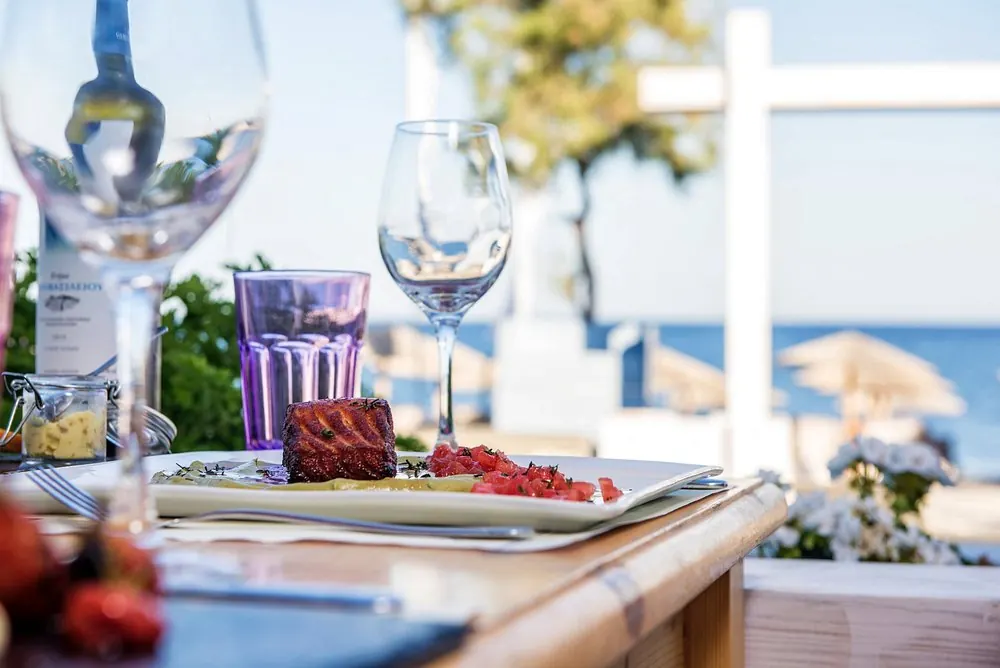
Grilled octopus is the most iconic seafood dish in Greece, and in Santorini it appears at virtually every serious table. The key is the char: a proper grill gives the tentacles a smoky, slightly crisp edge while the inside stays tender. At aegean Safran, grilled octopus (25€) comes with smoked tarama mousse, a pairing that elevates the dish well beyond the standard.
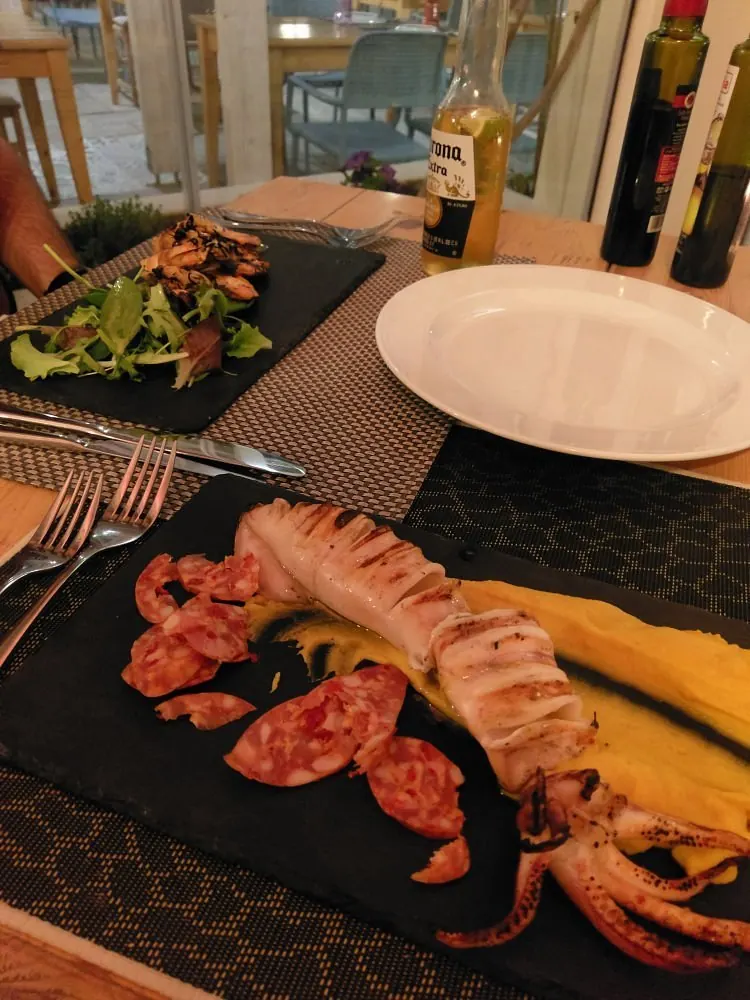
Calamari is the everyday standard by which a Greek kitchen is judged. Fried calamari (17€) at aegean Safran comes with white tarama mousse. Grilled calamari (24€) comes simply with olive oil and fresh lime. Both are worth trying.
Fresh sardine (16€) grilled and served with tomato tartare is one of those dishes that seems small and turns out to be the most satisfying thing on the table.
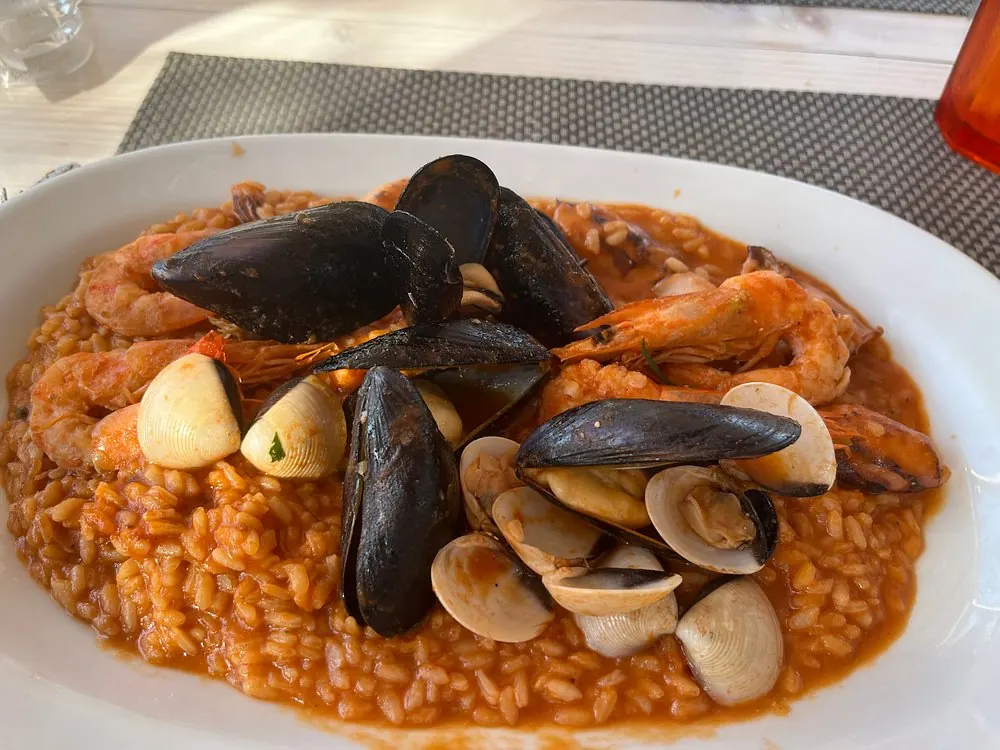
Mussels cooked in garlic, thyme and Santorini Assyrtiko wine (16€) are a combination that makes local sense. The wine goes into the cooking, and the same wine goes into the glass. Simple and correct.
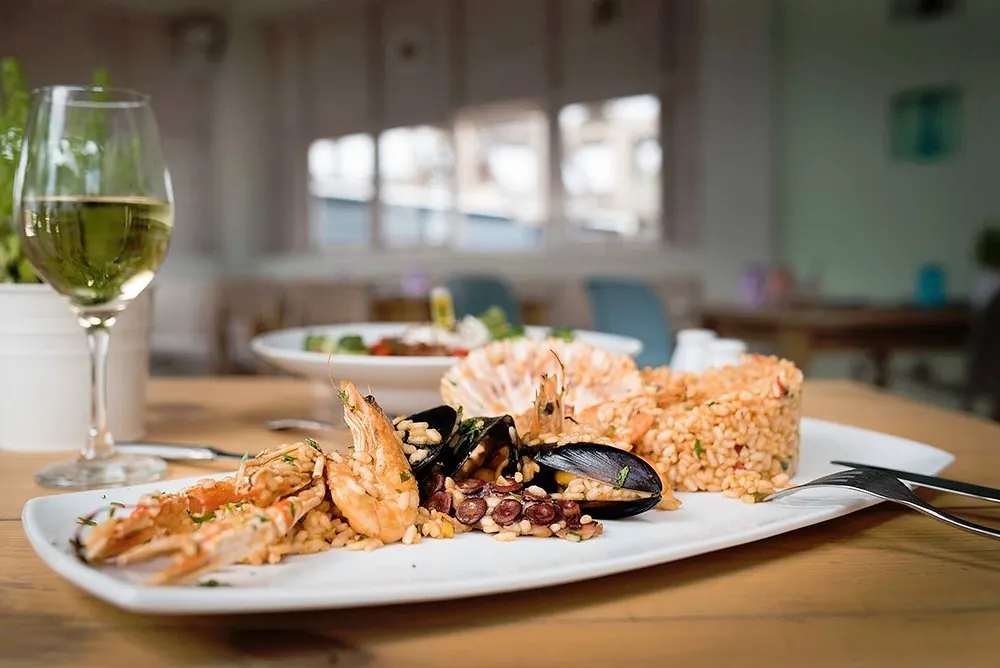
Butter shrimps (25€) with garlic and parsley are rich and generous. The shrimp tartare (22€) with salmon roe is more delicate and refined. Both reflect the range of a kitchen that takes seafood seriously.
For a main course, the Aegean fish fillet (35€) in red sauce with mushrooms or the steamed version with lemon vegetables are the most direct expression of what this coastline produces.
The Mediterranean Velouté Fish Soup with Saffron
This one is worth a separate mention. The Mediterranean velouté fish soup (18€) is made with saffron, and the pairing is deliberate. Saffron is in the name of the restaurant. It is used not as a garnish but as a structural element of the flavour. The soup is smooth, rich and deeply seasoned. On a cooler evening or as a starter to a longer meal, it is remarkable.
Stuffed Grape Leaves and Other Meze
Santorini eating is built on meze, small plates designed to be shared and eaten slowly. Beyond fava and tomato fritters, the table at aegean Safran includes stuffed grape leaves (13€) with rice, herbs and yogurt sauce, feta cheese in kataifi pastry (13.50€) with pistachio cream, roasted eggplant (13€) with feta and green olive oil, and traditional tzatziki (7€).
These are not fillers. They are the architecture of a proper Greek meal before the main event arrives.
The Saffron Salad
The Saffron Salad (23€) is worth mentioning as a complete plate in its own right: leafy greens, a juicy fish fillet, smoked salmon and green olive oil. The saffron thread that runs through the restaurant's identity shows up here not just in name but in the golden warmth of the ingredients.
Where to Eat These Dishes on the Southern Coast
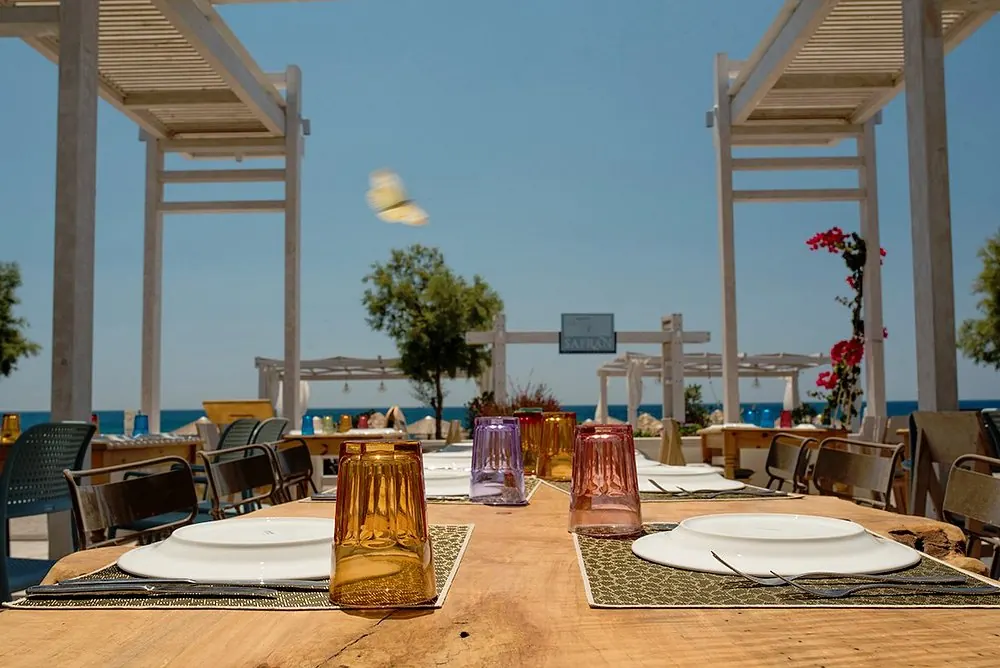
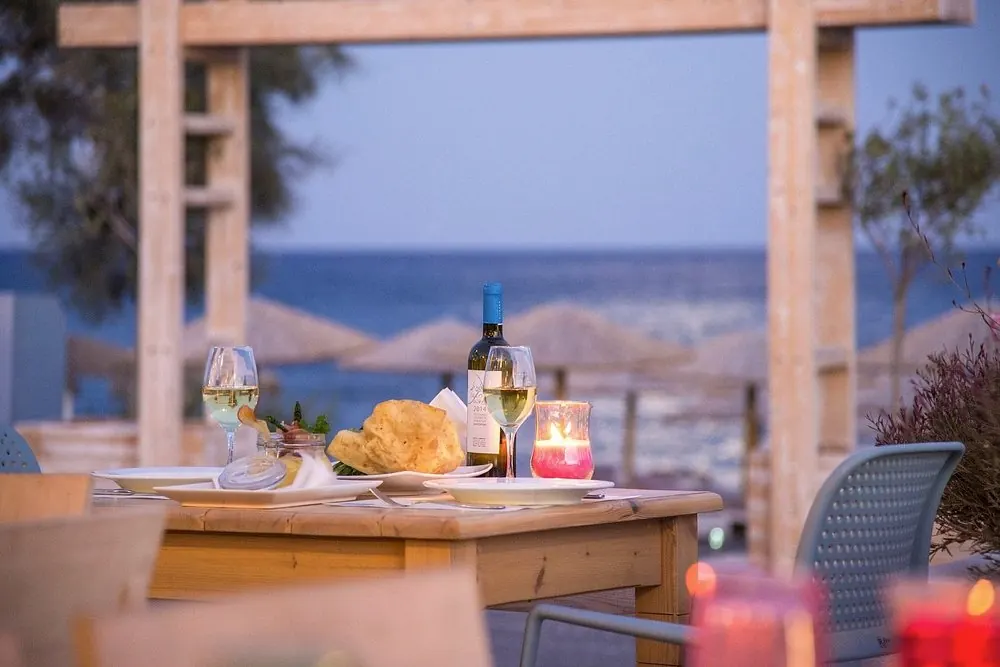
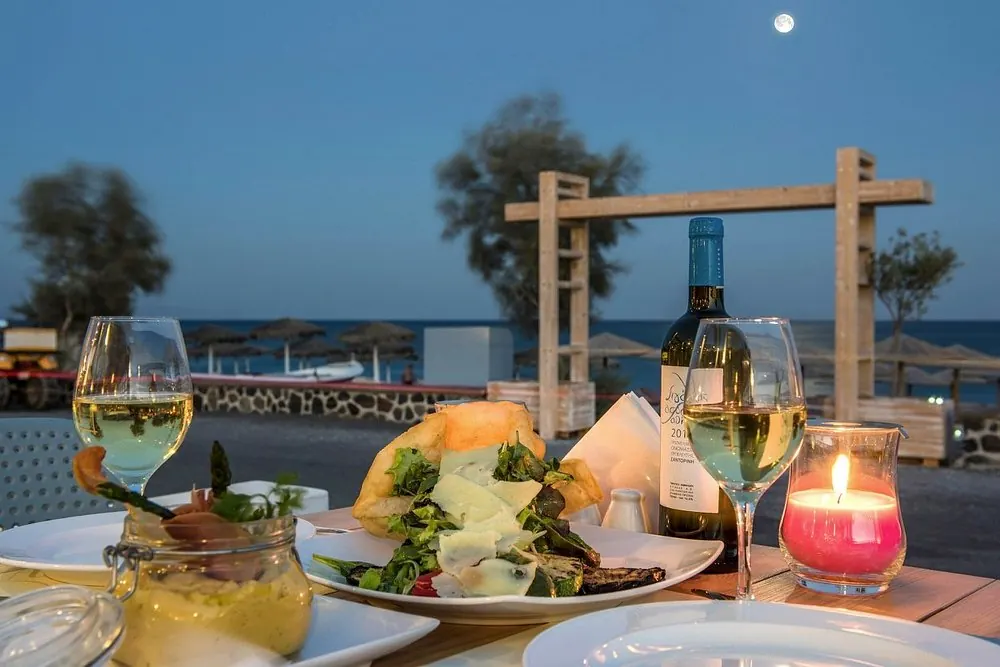
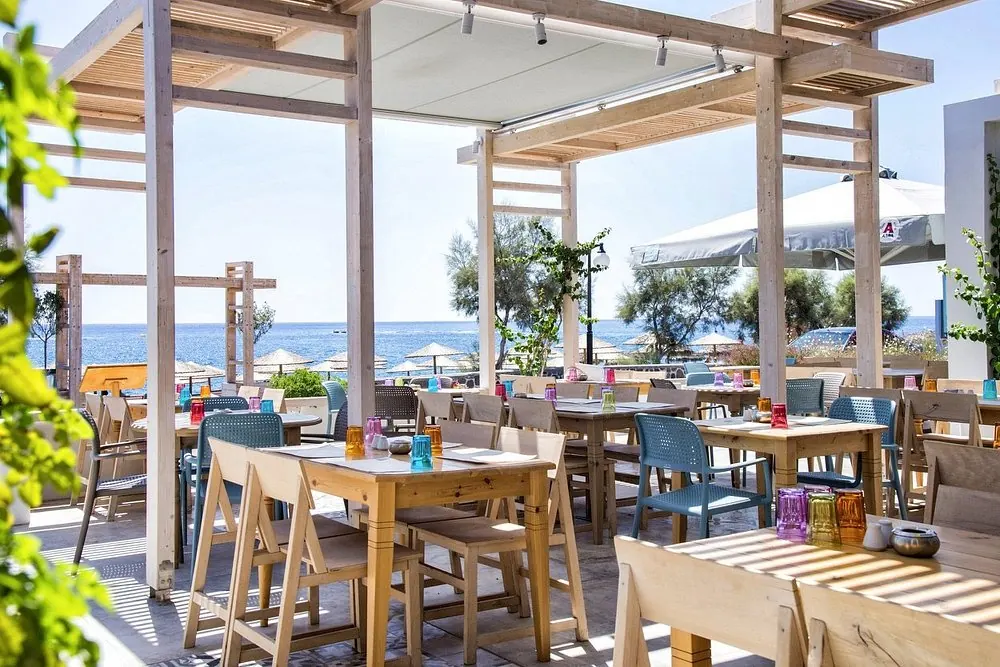
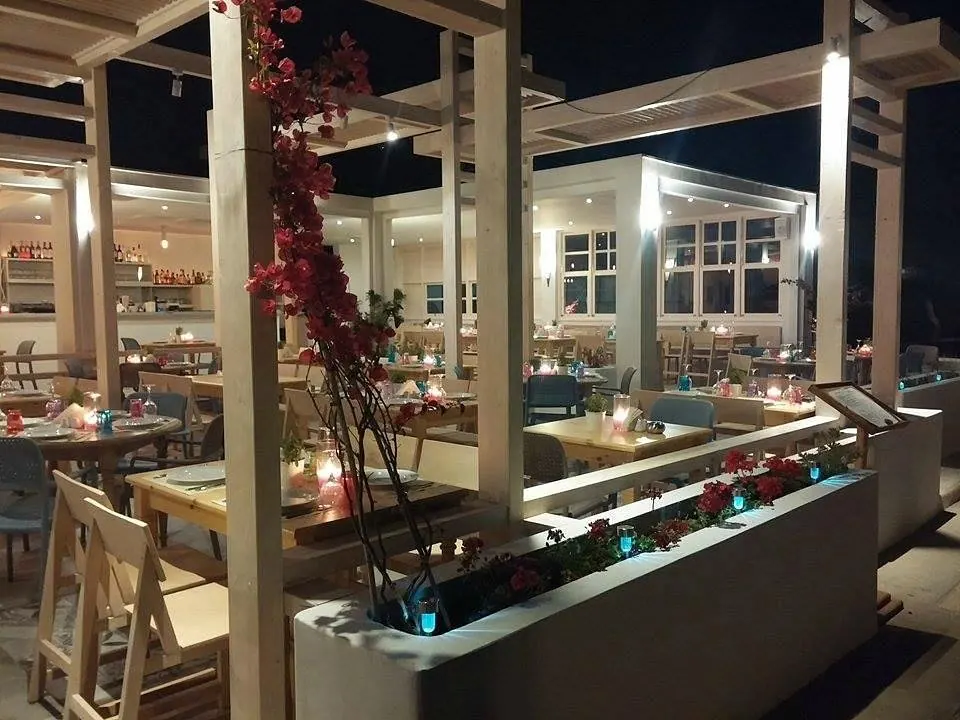
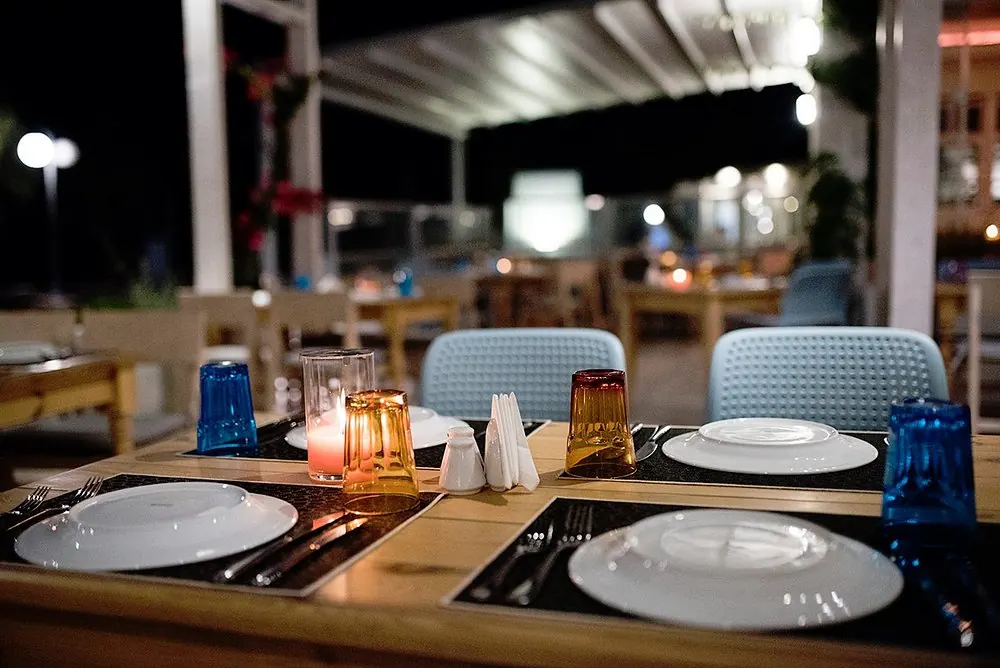
All of the dishes above are available at aegean Safran, located directly on the black sand beach of Perivolos. The restaurant is run by Christos Siosios and his son Miltos, a family team with over 30 years in Greek hospitality. They source daily from the local market and cook with the same standards they apply at their own table.
Open Monday to Sunday, 10:00 to 22:30. Reservations: +30 22860 81102.
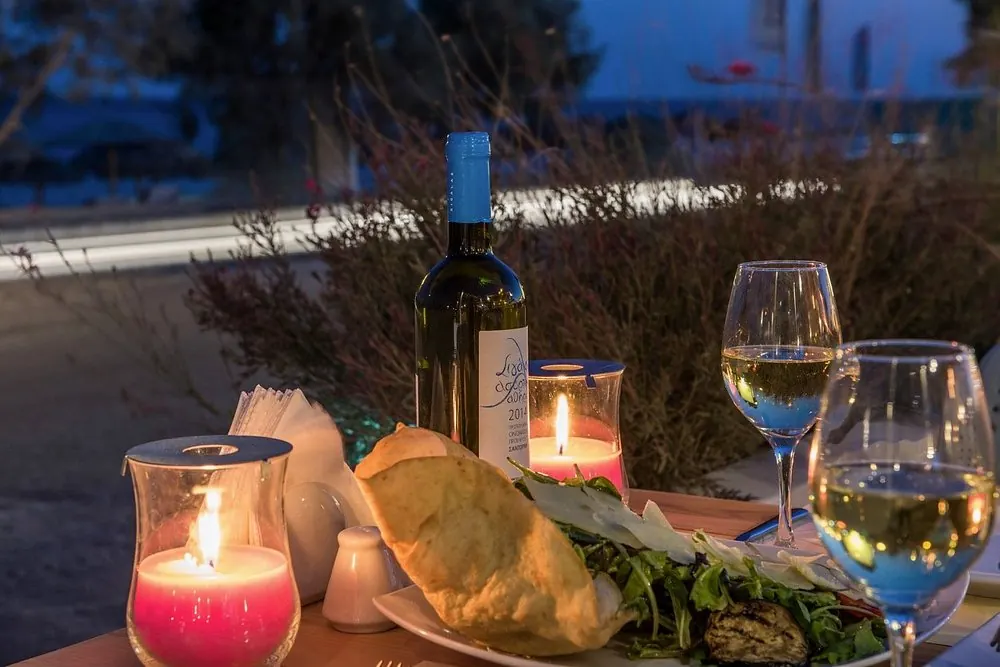
For wine pairings with these dishes, read the Santorini Wine Pairing Guide: Assyrtiko, Seafood and Dinner by the Beach.
Frequently Asked Questions
What is fava in Santorini?
Santorini fava is a creamy purée made from yellow split peas with PDO status, cultivated on the island for over 3,500 years. It is served with olive oil, capers and pickled onions and is one of the island's most iconic dishes.
What are tomatokeftedes?
Tomatokeftedes are traditional Greek tomato fritters made with Santorini cherry tomatoes, herbs, onion and sometimes feta, fried until crispy outside and juicy inside. They are Santorini's most recognisable street food and meze.
What seafood should I try in Santorini?
The essential seafood dishes in Santorini include grilled octopus, fried or grilled calamari, fresh sardines, mussels cooked in Assyrtiko wine, butter shrimps and fresh Aegean fish fillet. All are available at aegean Safran on Perivolos beach.
What is the best area to eat seafood in Santorini?
Perivolos and Perissa on the southern coast offer some of the best beachfront seafood restaurants on the island, with direct access to fresh Aegean catch and a more relaxed atmosphere than the caldera-side restaurants.